
Copyright © Shiraishi Group ALL RIGHTS RESERVED.
Copyright © Shiraishi Group ALL RIGHTS RESERVED.
The World of Calcium
October, 7th 2025
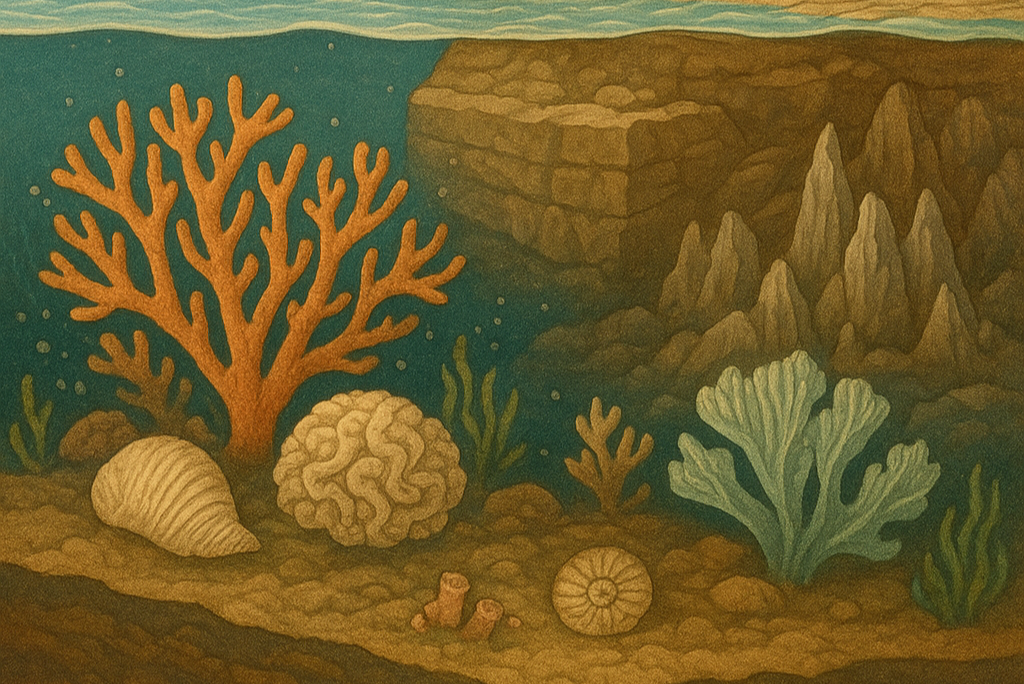
Table of Contents
Calcium is essential for life – from building strong bones to supporting blood clotting. But did you know that the calcium we consume today has its origins in the ancient oceans, millions of years ago? The story of calcium carbonate, the main component of limestone, is a fascinating journey through Earth’s deep history.
Calcium carbonate (CaCO₃) occurs naturally as limestone, marble, and chalk. But how do tiny marine organisms turn into massive rocks over time?
Fun fact: Most limestone actually comes from biological sources rather than purely inorganic calcium carbonate.
These deposits undergo geological processes like cementation, crystallization, and compaction before becoming solid rock.
Cementation:
minerals fill the spaces between particles, binding them together
Crystallization:
the mineral components form stable crystals
Compaction:
layers of sediment are pressed together under pressure, reducing gaps and increasing density
Over millions of years, these limestone layers may rise above the Earth’s surface, forming stunning landscapes.
Examples from nature:

Image © Limestone Association of Japan – reproduced with permission.
Limestone is far from rare. Carbonate rocks make up about 15–20% of all sedimentary rocks, and an estimated 5×10¹⁷ tons exist within the Earth’s crust – a massive reservoir of carbon dioxide bound over billions of years.
But how much is 5×10¹⁷ tons?
500,000,000,000,000,000 tons – that’s five hundred quadrillion tons!
To make this enormous number more tangible:
These comparisons help show just how massive and impressive the Earth’s limestone reservoirs really are.
From tropical coral reefs to icy highlands, limestone shapes landscapes and supports industries worldwide.
The next glass of milk or calcium supplement in your hand carries more than just nutrition – it tells the story of ancient seas, tiny organisms, and geological forces working over millions of years. Calcium carbonate is not just a building block of our bodies; it’s a witness to Earth’s long history.
January, 7th 2026
Calcium Sources and Bioavailability – Getting the Most from Your Diet
Introduction Calcium is essential, but not all sources are absorbed equally by the body. Understanding which foods and supplements provide calcium effectively can help maximize bone health and prevent deficiencies. Major Calcium Sources 1. Dairy Products Milk, cheese, yogurt Highly bioavailable; absorption is generally good 2. Bones, Shells, and Eggshells When powdered, these provide calcium comparable to dairy Commonly used in supplements and fortified foods 3. Vegetables Leafy greens like kale, broccoli, and bok choy Calcium content is affected by oxalates (e.g., spinach) which can inhibit absorption 4. Fortified Foods and Supplements Calcium carbonate, calcium citrate, and other compounds Often added to cereals, drinks, and tablets for easy intake Factors Affecting Calcium Absorption Calcium absorption and utilization are influenced by: Other dietary components: Oxalic acid, phytic acid, and fiber can reduce uptake Age and life stage: Infants, children, pregnant women, and postmenopausal adults have different needs Vitamin D: Essential for efficient calcium absorption Breastfeeding and menopause: Hormonal changes affect calcium metabolism Tips for Maximizing Calcium Intake Pair calcium-rich foods with Vitamin D sources (sunlight, fish, fortified foods) Consume varied sources to balance inhibitors like oxalates Consider supplements if dietary intake is insufficient, especially for people at risk of osteoporosis Conclusion Calcium is more than just a number on a nutrition label – it’s a crucial nutrient that depends on both source and absorption. By choosing the right foods, supplements, and combinations, you can ensure your body gets the calcium it needs for strong bones, healthy muscles, and overall well-being.

December, 4th 2025
Calcium in the Human Body – Importance and Utilization
Introduction Calcium is much more than a mineral in your diet – it’s a critical building block for life. About 1.5–2% of the human body is calcium, most of which resides in bones and teeth as calcium phosphate. The rest circulates in blood and extracellular fluids, performing vital functions. The Role of Calcium in the Body Calcium is essential for: Bone and tooth formation – providing strength and structure Nerve transmission – sending signals throughout the body Muscle contraction – enabling movement and heartbeats Cell membrane function – maintaining proper permeability Blood clotting – crucial for wound healing Calcium Metabolism Most dietary calcium enters the body as calcium compounds (from food or supplements) In the digestive system, calcium dissolves into ions and is absorbed in the small intestine Bone remodeling: calcium is constantly deposited and removed from bones to maintain a stable plasma calcium concentration Growth and aging: Until about 25 years old, bone formation exceeds calcium loss, increasing bone mass With age, calcium loss may exceed formation, leading to bone weakening and osteoporosis Adequate calcium intake during growth is key to maximizing bone mass As shown on the map, there is currently a deficiency in calcium intake in many Asian countries (red/orange). In contrast, countries with higher consumption of dairy products often achieve adequate calcium intake (green). Source:Pub Med Central - Global dietary calcium intake among adults: a systematic review Factors Affecting Calcium Absorption Calcium absorption is influenced by: Dietary components: Oxalic acid (in spinach), phytic acid, and dietary fiber can reduce absorption Life stage: Infants, pregnant women, and post-menopausal adults have different calcium needs Vitamin D levels: Essential for proper calcium absorption Studies show: Calcium absorption from vegetables depends on the presence of inhibitors like oxalates Overall absorption rates are about 20–30%, varying with age, diet, and health status Conclusion Calcium is a vital mineral that goes far beyond building bones. Its absorption and utilization are influenced by diet, lifestyle, and life stage. Ensuring adequate calcium intake, especially during growth and later life, is key to maintaining strong bones and overall health.
October, 8th 2025
Calcium Carbonate – From Rock to Daily Life
Introduction From the limestone mountains to your breakfast cereal or supplement, calcium carbonate (CaCO₃) travels a fascinating journey. But how does this mineral go from a natural rock to a substance we use every day in food, industry, and medicine? Ground vs. Precipitated Calcium Carbonate Calcium carbonate comes in two main types, depending on how it’s processed: 1. Ground Calcium Carbonate Produced by crushing and classifying crystalline limestone Known as white calcium carbonate due to its bright whiteness Particle size: can occure in a variety of sizes Uses: industrial fillers, food additives, pharmaceuticals Shiraishi Calcium Kaisha deals with GCC products as well 2. Precipitated Calcium Carbonate Made chemically by calcining limestone to quicklime, then hydrating it and reacting it with carbon dioxide Fine particles (even on a nano scale for industrial use) Uses: food, cosmetics, and high-tech industrial applications Shiraishi Kogyo Kaisha primarily produces PCC, using the carbon dioxide gas synthesis method, allowing us to precisely control particle size and shape Why Calcium Carbonate Matters Calcium is one of the most abundant elements in the Earth’s crust, but it never exists freely in nature. Instead, it is found as: Carbonates (CaCO₃) Sulfates, fluorides, phosphates, silicates Many of the calcium compounds we consume in food are derived from calcium carbonate. Even familiar sources like eggshells, bones, and shells originally obtained their calcium from limestone, either directly or through animal feed. Everyday Uses Calcium carbonate’s versatility makes it a key material in daily life: Food: supplements, fortification, antacids Industry: fillers, paper, plastics, paint Agriculture: soil conditioner, animal feed Medicine: calcium tablets and pharmaceuticals This transformation from rock to refined mineral shows how geology directly impacts our health and industries. Conclusion The next time you take a calcium supplement or see calcium listed on a product label, remember: it all starts as limestone, formed millions of years ago in ancient seas. From fossilized coral to modern industry, calcium carbonate bridges the gap between the Earth’s history and our daily lives.